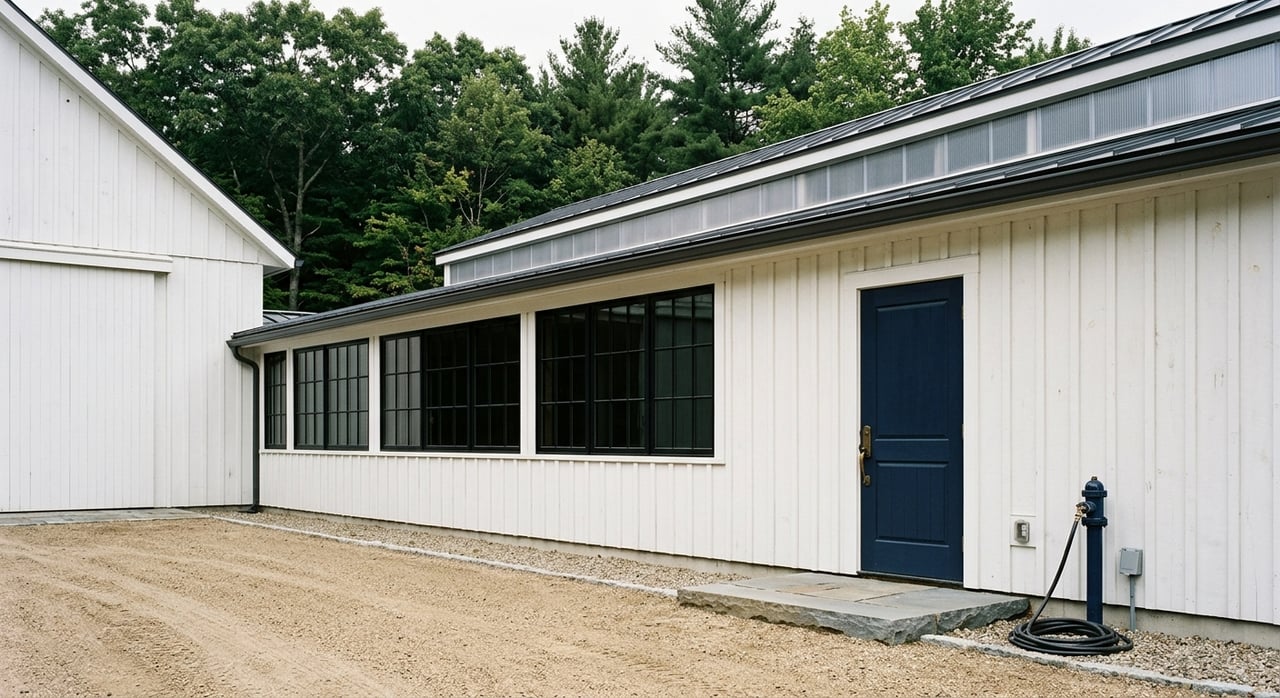
Looking for a horse property or farm in Hopewell Township can feel exciting right up until the details start piling up. A beautiful house, a few open acres, and an existing barn may look like the perfect fit, but what matters most is whether the land actually supports the way you want to use it. If you are considering an equestrian or farm purchase here, this guide will help you focus on the issues that matter most before you commit. Let’s dive in.
Why Hopewell Township Draws Farm Buyers
Hopewell Township has long appealed to buyers who want open space, rolling terrain, waterways, and active farmland around them. Mercer County also points to a broader preservation framework in the area, with local and county efforts aimed at keeping agriculture viable over time.
That matters because you are not just buying a scenic setting. You are buying into a township where agricultural use is part of the local landscape and where preservation, land use, and property function often shape value just as much as the home itself.
Start With Site Fit, Not Just Acreage
One of the biggest mistakes buyers make is assuming more acres automatically means more options. In Hopewell Township, the better question is whether the site layout works for your intended use.
If you are planning for horses, equipment, or farm activity, you need enough usable space for the barn, paddocks, fencing, driveway access, trailer turnaround, and manure area. A property can look ideal on paper and still become limiting if the layout does not align with township rules.
Hopewell’s zoning office reviews compliance with land-use ordinances, issues zoning permits, and handles many of the changes buyers often want to make after closing. Barns, fences, driveway work, and similar improvements can all trigger review.
Barn Setbacks Matter Early
Hopewell’s residential bulk zoning schedule lists barns, silos, and animal shelters with 100-foot front, side, and rear setbacks, along with a 60-foot height limit. In practical terms, that means the buildable or usable area for equestrian improvements may be more constrained than the total lot size suggests.
If a parcel has odd dimensions, wetlands, easements, or a house placed near the middle of the lot, those setbacks can have a major impact. This is why site planning should happen before you fall in love with a property’s marketing photos.
Farming Is Broadly Supported, But Details Still Count
Planning board materials state that farms and other agricultural uses are treated as permitted principal uses in all districts. Township code also says farming may occur up to the property line, allows fences and slow-moving farm equipment, and requires notice to subdivision buyers about nearby farming activity.
That is encouraging for buyers who want a true agricultural setting. Still, support for farming does not mean every specific idea automatically fits every parcel, so it is smart to verify your intended use with the zoning office early.
Understand Utilities Before You Buy
For equestrian and farm properties, utility questions are never minor. In Hopewell Township, they are often central to whether a purchase feels smooth or becomes expensive.
The township says public water and sewer are limited to a small number of customers and that about 90% of township land still has no sewer access and relies on septic systems. That means many farm and horse properties will involve private systems rather than public utility connections.
Private Well and Septic Are Common
If a property relies on a private well and septic, your due diligence needs to go well beyond a standard home inspection. Capacity, condition, testing, and compliance all matter, especially when the property will support a household plus agricultural activity.
Hopewell requires a Letter of Review for any sale, rental, or change of use involving onsite septic and or onsite well water quality unless the property has public water or public sewer. The township also requires septic inspection reports and well-water analysis to be filed before occupancy changes.
Well Testing Is Part of the Process
New Jersey’s Private Well Testing Act requires testing when covered property is sold or leased, and the results must be reviewed before closing. NJDEP says the test can include up to 43 parameters.
Hopewell’s water-quality guidance also recommends periodic testing for issues such as coliform, nitrates, pH, arsenic, lead, VOCs, mercury, gross alpha, and uranium. For buyers, that means water quality should be treated as a priority item, not a box to check at the last minute.
Check Environmental Constraints Before Making Plans
With land purchases, the biggest surprise is often not the house. It is the part of the property you assumed you could use.
NJDEP advises buyers to determine whether any portion of a site is regulated before purchasing or altering it. Wetlands and related transition areas can affect where you place barns, access drives, fences, turnout areas, and other improvements.
A Letter of Interpretation from NJDEP can confirm the presence or absence of wetlands or transition areas, but it does not authorize work by itself. If your plans depend on a certain field or corner of the lot, you want clarity on that before closing, not after.
Know the Difference Between Rural Appeal and Tax Status
Many buyers assume that if a property looks like a farm, it must come with farm-related tax benefits or protections. In New Jersey, that is not always the case.
A property can have a barn, fencing, and open land and still fall short of formal farmland assessment or right-to-farm eligibility. That difference can affect taxes, operations, and your long-term plans.
Farmland Assessment Has Specific Rules
New Jersey guidance says farmland assessment generally requires at least 5 contiguous acres, active agricultural or horticultural use for the two years before the tax year, and filing with the tax assessor by August 1. The state also requires a gross-sales threshold.
For farms under 7 acres, the state requires a descriptive narrative and sketch, and Hopewell’s farmland-assessment guidance mirrors that timing and requirement. If a seller mentions farmland assessment, it is worth confirming the filing history and current status rather than assuming it transfers cleanly without review.
Right-to-Farm Is Separate
Right-to-farm protections are related to farmland assessment, but they are not identical. New Jersey says a commercial farm larger than 5 acres generally must produce at least $2,500 of agricultural output annually and also qualify for farmland assessment, while smaller farms face a higher production threshold.
For buyers, the takeaway is simple: the land’s appearance does not tell you everything. The paperwork, production history, acreage, and actual use all matter.
Preservation Can Shape Future Flexibility
Hopewell Township and Mercer County have an active preservation framework, which is part of what keeps the area’s agricultural character intact. That can be a positive if you value protected open land and a more stable rural setting.
At the same time, preservation status can affect what you can do with a property later. If your long-term plan includes redevelopment, subdivision, or major changes, you need to understand the restrictions tied to the parcel.
Easements May Limit Development
Mercer County offers several preservation tools, including easement purchase, fee-simple purchase, and term preservation. A preserved easement creates a permanent deed restriction that prevents non-agricultural development.
That does not make a property less valuable. It simply means the value may be tied more closely to agricultural use and lifestyle appeal than to future development potential.
Planning Review Still Matters
Hopewell’s Planning Board reviews subdivisions and site plans. So if you are buying with an eye toward a future lot split, a reconfiguration, or another major land change, that idea needs review and verification.
This is especially important with larger parcels, where buyers sometimes assume flexibility that may not exist. The smarter move is to treat future-use potential as something to confirm, not something to guess.
Questions to Ask Before You Buy
When you tour an equestrian or farm property in Hopewell Township, keep your questions practical and specific. The goal is to understand how the land functions now and what it can realistically support later.
Here are some of the highest-value questions to ask early:
- Can the barn, fencing, and other improvements fit current setback rules?
- Is the property on public water and sewer, or does it rely on private well and septic?
- Have the well and septic been tested and reviewed as required?
- Are there wetlands, flood hazard areas, or recorded easements affecting usable land?
- Is the parcel currently farmland-assessed?
- Is the property preserved, or subject to an easement or deed restriction?
- If you want boarding, lessons, or direct farm sales, is that use permitted as of right or does it need formal review?
Build the Right Local Due-Diligence Team
Complex properties need more than a quick showing and a standard inspection. In Hopewell, the most useful early contacts often include the zoning office, health department, septic inspector, NJDEP-certified well lab, tax assessor, surveyor, and a land-use attorney.
Each one helps answer a different part of the puzzle. Together, they can help you understand whether the property truly matches your goals or only appears to at first glance.
That is especially important when you are buying a property with lifestyle and land-use components, not just square footage. A calm, organized review upfront can protect both your plans and your budget.
A Smarter Way to Buy in Hopewell Township
Buying equestrian and farm property in Hopewell Township is often less about finding the prettiest parcel and more about finding the right fit. The best purchase is one where the land, structures, utility setup, environmental conditions, and tax status all support how you want to live and use the property.
When the details are handled well, these properties can offer something special: space, function, and a setting tied to one of Central New Jersey’s most established agricultural landscapes. If you want a clear, steady plan for evaluating horse properties, farms, or large-acreage homes in this market, Tara Stone can help you move forward with confidence.
FAQs
What should you verify first when buying a farm property in Hopewell Township?
- Start with zoning, site layout, utility type, and environmental constraints, because those factors often determine whether the property can support your intended use.
Does acreage alone make a Hopewell Township property suitable for horses?
- No. The parcel also needs workable layout, required setbacks, and enough usable area for features like a barn, fencing, paddocks, driveway access, and manure management.
Are most Hopewell Township farm properties on public sewer?
- No. The township states that about 90% of its land has no sewer access and relies on septic systems, so private systems are a major part of due diligence.
What well-testing rules apply to a Hopewell Township property sale?
- New Jersey’s Private Well Testing Act requires testing for covered property sales or leases, and the results must be reviewed before closing.
Can preserved farmland in Hopewell Township be developed later?
- A preserved easement can create a permanent deed restriction that prevents non-agricultural development, so preservation status should always be reviewed carefully.
Does farmland assessment automatically apply to any rural-looking property in Hopewell Township?
- No. Farmland assessment depends on acreage, active agricultural or horticultural use, filing deadlines, and other state requirements, not simply on appearance.