As The Daily Princetonian reported, "It doesn't change anything," Hawkins told the Princeton Council earlier this month, moments after presenting the borough's newly finalized historic preservation guidelines. "It doesn't regulate more or less than is currently regulated."
That line matters more than the 250 pages that came with it. For anyone circling a house inside one of the 21 historic districts listed by the Princeton Historic Preservation Commission, the new guidelines look like relief: a single document, split into 16 sections, walking property owners through paint colors, exterior woodwork, and flood mitigation without requiring a phone call first. What it actually delivers is clarity about a system that hasn't gotten any easier to satisfy. The rules are the same rules. The only thing that moved is how quickly you can find out what they say about your house.
The Problem the Guidelines Were Built to Solve
Before this month, a property owner in a historic district who wanted to do more than routine upkeep had one real option: submit an inquiry to the Historic Preservation Commission and wait for an answer. There was no self-serve way to know in advance whether a project fell inside the lines. The new guidelines change that sequence. A homeowner can now look up their architectural style, flip to the relevant section, and get a reasonable sense of what's likely to sail through and what's going to need a hearing, before they've spent money on drawings or called a contractor.
Councilmember David Cohen called the result accessible, pointing to its illustrations as a reason to read it even outside a historic district. Councilmember Brian McDonald, who also chairs the Ivy Club's board of governors, pushed the other direction, pressing for a clearer line between what counts as routine and what triggers commission review. Both reactions describe the same document. One reads it as a map. The other reads it as a document that still leaves the final call to a volunteer board.
What Actually Still Requires a Certificate of Appropriateness
Historic Preservation Officer Elizabeth Kim has been consistent on this point for years, according to Community News: ordinary maintenance, replacing a window, a roof, or a door with something equivalent, doesn't require filing anything.
The commission's own February 2026 agenda shows how granular this gets in practice. A February 2026 agenda included an application to modify previously approved garage doors and windows at a home on Leigh Avenue in the Witherspoon-Jackson district. The same agenda carried two separate applications for storefront changes on Nassau Street, one for repainting, one for window and door modifications, both inside the Central Business Historic District. None of these are additions or teardowns. They're modest, visible changes, and every one of them still needed a place on a commission calendar.
That's the detail the new guidelines don't erase. They tell you in advance which category a project falls into. They don't shrink the category of projects that need a vote.
The Clock Buyers Tend to Underestimate
Princeton's Historic Preservation Commission FAQ explains that the ordinance runs on two different clocks depending on how an application is filed, a distinction that matters for anyone budgeting a renovation before they close.
| Application type | Completeness review | What happens next |
|---|---|---|
| Preservation plan only | 15 calendar days | The next step depends on the application |
| Preservation plan tied to a development application (site plan or subdivision) | 45 calendar days | If not approved administratively, the commission must hold a hearing within 45 days of the referral |
| Demolition or new construction | Review timing depends on the application | Further review may be required before work proceeds |
The filing fee for a standalone preservation plan is $75, with an additional $50 publication fee when a public hearing is required. Those numbers are modest. The time isn't. Design-build firms that work regularly in Princeton's historic districts put the added timeline at three to six months once a project needs Historic Preservation Commission sign-off, layered on top of the standard building permit process. For a buyer who assumed a kitchen addition would break ground by spring, that's a season lost before a shovel touches ground.
Where the Scrutiny Concentrates
Not every historic address gets the same level of attention. According to Payne Family Construction, properties on Stockton Street and inside the Princeton Battlefield Historic District face tighter design review because of their proximity to protected national landmark sites. The Prospect Avenue Historic District, home to Princeton's eating clubs and the borough's most recently designated district, has its own layer of complexity: a 2023 elevator and parking lot application for the Tower Club needed sign-off from the Historic Preservation Commission, the Zoning Board of Adjustment, and the Shade Tree Commission before it could move forward, according to the Princeton report on the Tower Club application.
Witherspoon-Jackson, designated in 2016 under Princeton's historic preservation ordinance, was Princeton's first new historic district in almost 20 years and remains its most contested. HPC Chair Julie Capozzoli has described the goal plainly: meaningful landmarks were disappearing, and historic preservation review became the only mechanism to pause and evaluate a teardown before it happened. Community groups including the Save Jugtown campaign, Defend Historic Princeton, and the Princeton Coalition for Responsible Development have organized specifically around these tensions, pushing back on redevelopment proposals in historic pockets of the borough.
What This Means Before You Write an Offer
A house inside a historic district isn't off limits to renovation. Before an offer goes in, it's worth confirming three things: whether the specific address sits inside a designated historic district, whether any prior owner has an existing preservation plan or resolution on file with the Office of Historic Preservation, and whether the renovation you're picturing may need commission review.
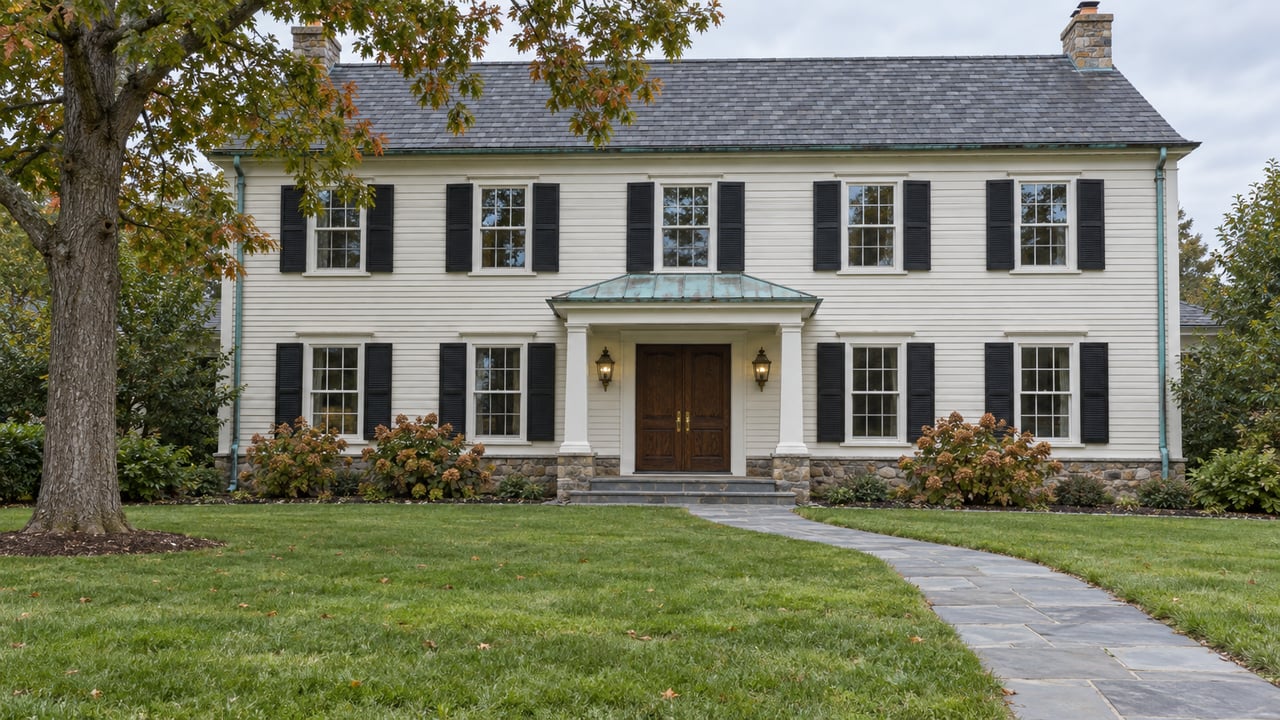
None of that should scare off a buyer who wants a Colonial on Stockton Street or a Tudor in the Western Section. It should shape the offer. A buyer who budgets for a six-month review window and a buyer who assumes a standard permitting timeline are making two very different bets on the same house.
FAQ
Does historic district review apply to interior renovations? Review requirements depend on the project and the property, so check with the Historic Preservation Commission before starting work.
How can I check whether historic district review may affect a property? Confirm the property's status with the Office of Historic Preservation before making plans.
What happens if the commission denies an application? An owner has ten days to appeal to the Zoning Board of Adjustment.
If you're weighing a historic property in Princeton and want a clear read on what a specific address allows before you write an offer, Stone Homes NJ can walk through the district, the paperwork, and the realistic timeline with you before you're locked into a contract.
This article is general information, not legal, tax or financial advice. Consult a qualified professional about your situation.