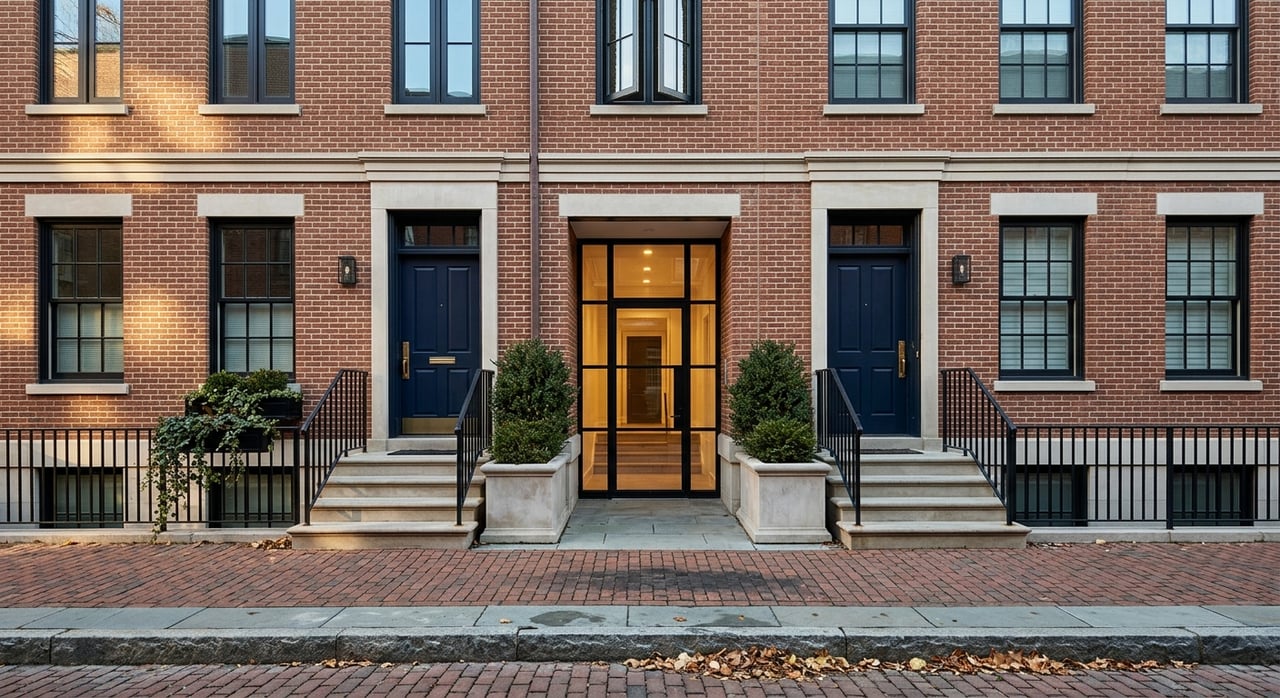
Wondering whether a condo or townhome is the better fit in Princeton? You are not alone. In an upper-market area where attached homes can range from in-town residences near Palmer Square to quieter wooded communities, the right choice often comes down to ownership structure, maintenance expectations, carrying costs, and lifestyle. This guide will help you compare both options with a Princeton-specific lens so you can make a clear, confident decision. Let’s dive in.
Why the choice matters in Princeton
Princeton is not a one-size-fits-all attached-home market. Redfin’s May 2026 data places the median sale price at $1.2M, while Realtor.com’s March 2026 snapshot shows a median listing price of $1.15M. Even within Princeton, pricing can shift meaningfully by area, with Downtown Princeton showing a higher median listing price than Princeton North.
That range matters when you are comparing condos and townhomes. In a market like this, the monthly payment is only part of the picture. You also need to weigh taxes, HOA dues, amenities, maintenance obligations, and the long-term resale appeal of a specific community.
Start with ownership, not the label
One of the biggest mistakes buyers make is assuming the word “townhome” tells them everything they need to know. In New Jersey, a condominium is a specific legal form of ownership that includes ownership of a unit plus an undivided interest in the common elements under a master deed. By contrast, “townhome” often describes the layout or style of the home, not necessarily the legal ownership structure.
That means two homes that look similar may come with very different obligations. A townhome may be part of a condominium association, a fee simple arrangement, or even a mixed structure depending on the community. In Princeton, where community formats can blur, the deed and association documents matter more than the marketing description.
Questions to ask about ownership
- Is the home legally a condominium or fee simple property?
- What parts of the property do you own outright?
- What areas are considered common elements?
- Who is responsible for exterior components like roofs, siding, and shared drives?
- Are there any limits on changes to the exterior or outdoor space?
Compare maintenance expectations carefully
Many buyers are drawn to attached homes because they want lower-maintenance living. That can absolutely be true in Princeton, but the degree of convenience depends on the community, not just whether the home is called a condo or townhome.
Some Princeton-area communities include services like lawn care and snow removal. Meridian Walk, for example, states that lawn care and snow removal are provided. Princeton Windrows describes maintenance-free villa and townhome living, which shows that townhomes can offer a similar ease-of-living appeal often associated with condos.
The key is to ask what “maintenance-free” really means. In one community, it may cover the exterior envelope, landscaping, and snow. In another, it may be limited to common grounds only, leaving more responsibility with the owner.
What to review in the HOA documents
- Exterior maintenance responsibilities
- Roof and siding obligations
- Snow removal scope
- Landscaping coverage
- Parking and garage rules
- Building insurance responsibilities
- Amenity access and fees
Think about lifestyle and setting
In Princeton, attached homes span a wide lifestyle spectrum. Some buyers want to be close to shops, restaurants, and the downtown core. Others want a more tucked-away setting with trees, quiet streets, or a garage-focused layout.
That is why the condo-versus-townhome decision is also a lifestyle decision. Palmer Square Residences combines townhomes and condominiums in a highly walkable downtown setting. Victoria Mews emphasizes in-town, maintenance-free condo living with landscaped promenades, courtyards, and steel-and-concrete construction intended to improve quality and privacy.
On the other hand, communities such as Governors Lane and Campbell Woods show a different side of the market. These settings appeal to buyers who want a more secluded or wooded environment while still enjoying the benefits of attached-home living.
Ask yourself these Princeton lifestyle questions
- Do you want a more walkable in-town setting or a more private enclave?
- How important is a garage?
- Do you want amenities like a clubhouse, pool, or fitness center?
- Are you comfortable with more shared spaces, or do you want a stronger sense of separation?
- Will your day-to-day routine depend on commuting access?
Look beyond dues to total carrying cost
A condo with lower maintenance may still cost more month to month than a townhome with fewer amenities. That is why it is important to compare total carrying cost, not just price.
In Princeton, Mercer County’s 2025 abstract lists the total tax rate at 2.733. For attached-home buyers, that tax bill sits on top of HOA dues and any potential special assessments. In practical terms, a home with attractive amenities may have a noticeably different long-term cost profile than a simpler community with fewer shared features.
Meridian Walk is a good example of why detail matters. Its amenity package includes a clubhouse, fitness center, outdoor pool, bocce court, shuttle service, walking trails, private balconies, and one-car garages. Those features can add meaningful convenience and appeal, but you should understand exactly how they affect the monthly HOA and the community’s reserve needs over time.
Compare costs side by side
| Cost factor | Why it matters |
|---|---|
| Purchase price | Sets your financing baseline |
| Property taxes | A major part of annual carrying cost |
| Monthly HOA dues | Can vary widely by services and amenities |
| Special assessments | May affect near-term cash needs |
| Insurance responsibilities | Can differ based on ownership structure |
| Maintenance savings | Lower owner responsibility can offset some costs |
Pay close attention to reserves and assessments
This is one of the most important parts of condo and townhome due diligence in New Jersey. State structural-integrity legislation makes reserve planning a serious buyer issue. The New Jersey Department of Community Affairs says the capital reserve study requirements apply to all planned real estate development associations, not just certain buildings.
That matters because attached-home communities often share costs for major common-area capital items. These can include exteriors, hallways, pools, parking areas, and landscaping. Strong reserves can help a community plan ahead, while weak reserves may increase the chance of future special assessments.
You should review more than the monthly dues. Ask for the latest budget, reserve information, and any history of special assessments. If the home is in a newer community, verify the DCA offering-plan registration and review the available financial disclosures.
Smart due diligence questions
- Are reserve studies current?
- Who prepared or oversaw the reserve study?
- Has the association had recent special assessments?
- Are there known upcoming capital projects?
- What common-area assets is the HOA responsible for maintaining?
- Are meeting and financial records available to owners?
Understand how resale can differ
In Princeton, resale value in attached homes is often tied to lifestyle as much as square footage. A downtown condo may appeal because of its location and lower-maintenance setup. A townhome with a garage, open layout, and commuter convenience may attract a different buyer profile.
This is where community-specific positioning matters. Downtown attached homes often carry a premium because of the in-town experience. At the same time, wooded enclaves and amenity-rich communities can also hold strong appeal for buyers who prioritize privacy, convenience, or a lower-maintenance alternative to a detached home.
The best choice for resale is usually the one that aligns clearly with a buyer segment. In Princeton, that might mean walkability, privacy, amenities, garage parking, or simpler ownership and upkeep. The goal is not to choose the “better” category in the abstract, but the better fit for your priorities and the community’s long-term market appeal.
Verify the Princeton address carefully
This is a very important local detail. A Princeton mailing address does not always mean the property is inside the Municipality of Princeton.
For example, Princeton Landing is legally in Plainsboro while using a Princeton address, and Meridian Walk is marketed in Princeton but served by the West Windsor-Plainsboro Regional School District. If you are comparing condos and townhomes, do not assume two properties are directly comparable just because both say “Princeton” in the address.
Confirm these details before you decide
- Municipality
- Mailing address
- School district
- Property tax jurisdiction
- HOA structure and governing documents
- Community amenities and restrictions
So, should you choose a condo or a townhome?
If you want a more simplified ownership experience, less exterior responsibility, and often a stronger emphasis on shared amenities, a condo may be the better fit. If you want more separation, features like a garage or private balcony, and a layout that feels more like a traditional home, a townhome may be more appealing.
That said, Princeton does not reward broad assumptions. Some townhomes function much like low-maintenance condos. Some condos offer strong privacy and premium construction. The smartest move is to compare the legal structure, monthly cost, reserve health, location, and day-to-day lifestyle of each specific community.
When you are buying in a market like Princeton, clear analysis matters. The right attached home is not just about what looks best online. It is about choosing a property that supports your lifestyle, protects your budget, and gives you confidence in the details.
If you want a calm, strategic read on Princeton condos and townhomes, Tara Stone can help you compare communities, review the details that affect long-term value, and build a smart plan around your goals.
FAQs
What is the difference between a condo and a townhome in Princeton?
- In Princeton, a condo refers to a specific legal ownership structure under New Jersey law, while a townhome often describes the home’s layout. You should review the deed and HOA documents to know what you actually own and what the association maintains.
Are Princeton townhomes always lower maintenance than single-family homes?
- Not always, but many Princeton-area townhome communities offer lower-maintenance living through services such as lawn care and snow removal. The exact level of maintenance depends on the community’s governing documents and HOA coverage.
Do Princeton condos and townhomes have HOA fees?
- Many do, and the dues can cover very different things from one community to another. You should compare what the HOA includes, such as exterior maintenance, amenities, parking, insurance obligations, and reserve funding.
Why do reserve studies matter for Princeton attached homes?
- Reserve studies help show whether an association is planning appropriately for major common-area expenses. In New Jersey, reserve requirements are a serious due diligence item because underfunded reserves can increase the risk of future special assessments.
Does a Princeton address always mean the home is in Princeton proper?
- No. Some communities use a Princeton mailing address but are legally located in another municipality. You should verify the municipality, tax jurisdiction, school district, and association documents before making comparisons.
Is downtown Princeton better for condos than townhomes?
- Downtown Princeton includes both condos and townhomes, and each can appeal for different reasons. The better choice depends on whether you value walkability, privacy, amenities, garage space, or a particular ownership structure more highly.